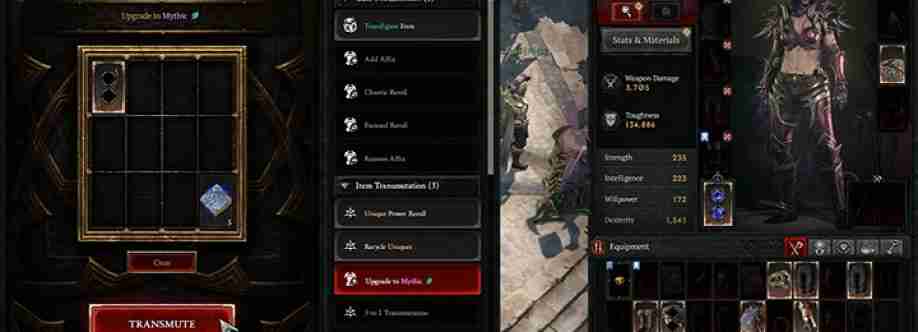
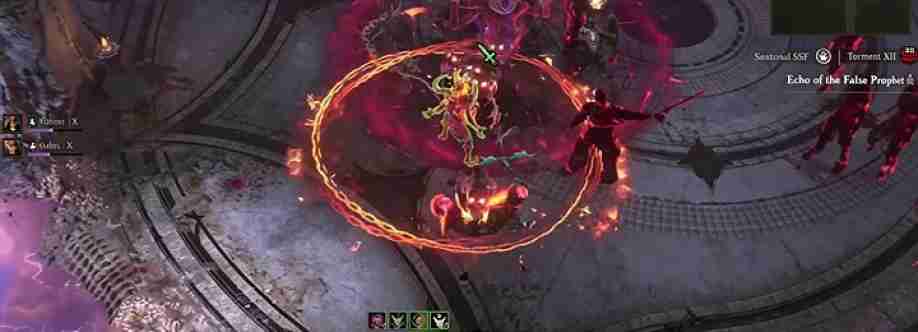
In Path of Exile 2, efficient progression depends heavily on resource management and smart trading decisions.
Many players choose to Buy POE 2 Currency www.ezbuff.com to accelerate early mapping, improve gear upgrades, and reduce grind time.
Using trusted marketplaces like EZBUFF can help ensure safer transactions and more consistent progression throughout the league.
Smart currency investment allows players to optimize builds faster and tackle endgame bosses with greater efficiency.
Ultimately, planning when to Buy POE 2 Currency helps both new and veteran players maintain momentum, experiment with builds, and enjoy a smoother overall gameplay experience in Path of Exile 2 journey.

image
MidnightFalconer MidnightFalconer membuat artikel baru
2 m

Buy POE 2 Currency on EZBUFF: A Beginner’s Guide to Getting Started Efficiently | #poe 2 Currency

Summary

Still frustrated by the massive investment required for most Path of Exile 2 endgame builds? While other players spend dozens of Divine Orbs assembling expensive gear sets, this Grenade Totem build can comfortably clear Delirium, Abyss content, and endgame bosses with an investment of only one Divine Orb. With a simple one-button playstyle and virtually no complicated mechanics, this guide breaks down exactly how the build works and why it's become one of the most efficient budget options in Return of the Ancients.

Start with Just 1 Divine Orb and Skip the Expensive Gear Grind

Key Takeaways:

Convert your Divine Orb into Exalted Orbs and focus entirely on cheap rare gear. Prioritize reaching 75% elemental resistances first, then aim for at least 50% Chaos Resistance. After that, stack maximum life, Strength, and Armour wherever possible. For your weapon, simply purchase an affordable crossbow with high physical damage. There is no need to chase expensive uniques or endgame-crafted items early on.

Who Benefits and Why:

Perfect for new players entering endgame content. Instead of spending days farming currency for expensive upgrades, you can assemble a functional setup within minutes and begin progressing immediately.

Drop Totems and Relax: The Simple Damage Loop Explained

Key Takeaways:

Place Plaster Grenade into your totem setup and let the totems handle all the damage. Enter a map and drop one or two totems ahead of enemy packs. Against rares and bosses, place three totems for maximum damage output. While the totems attack automatically, your only responsibility is avoiding dangerous mechanics and repositioning when necessary.

Who Benefits and Why:

Ideal for casual players and anyone who dislikes complex skill rotations. You no longer need to juggle multiple abilities while dodging attacks—the totems do the hard work for you.

Build an Almost Unkillable Recovery Engine

Key Takeaways:

Prioritize life recovery nodes throughout the passive tree and use Strength scaling to increase survivability. The build can achieve over 500 life regeneration per second even before significant upgrades. Carry a life flask, anti-stun flask, and armour flask, then eventually transition into Blood Magic to remove mana concerns entirely. This allows you to recover from mistakes quickly without constantly managing resources.

Who Benefits and Why:

Excellent for players learning boss mechanics. The strong sustain greatly increases survivability and allows you to survive situations that would normally result in death.

Allocate the Right Passive Nodes for Massive Damage

Key Takeaways:

Start by investing into maximum life and Strength. Next, focus on projectile and grenade damage clusters. Finally, acquire projectile speed reduction nodes whenever possible. Lower projectile speed causes grenade explosions to overlap more consistently, dramatically increasing single-target damage against bosses. If survivability becomes an issue, temporarily allocate additional defensive nodes before returning to offensive investments.

Who Benefits and Why:

Perfect for players who want a straightforward passive progression path without worrying about expensive respecs or complicated planning.

Gem Setup Tricks That Cost Almost Nothing

Key Takeaways:

Use Plaster Grenade alongside support gems such as Cluster Grenades and Wind Support. Swap in stronger single-target supports when fighting bosses. There is no need for expensive level 21 gems. Instead, maintain a balanced distribution of support gems and aim to reach equal totals across all gem categories to fully benefit from Gemling Legionnaire bonuses.

Who Benefits and Why:

Great for players who are unfamiliar with advanced gem setups. Even inexpensive support gems can provide significant damage increases when arranged correctly.

Destroy Every Endgame Activity with Ease

Key Takeaways:

As you move through maps, continuously place totems ahead of your character and let the explosions clear enemies. During Abyss and Delirium encounters, pre-place totems at spawn locations and focus entirely on movement. Against bosses, simply circle around dangerous mechanics while the totems continue dealing damage automatically.

Who Benefits and Why:

Perfect for players who value efficient mapping. The build offers excellent clear speed and can complete multiple high-tier maps per hour while maintaining strong boss damage.

Upgrade Without Ever Rebuilding the Character

Key Takeaways:

As more currency becomes available, upgrade your weapon first by acquiring a stronger physical-damage crossbow with additional turret bonuses. Next, improve your helmet and defensive gear, followed by high-value rare jewels. Every upgrade provides immediate benefits without requiring passive tree changes or a complete character rebuild.

Who Benefits and Why:

Ideal for long-term players who prefer steady progression. The build scales smoothly from a one Divine Orb budget all the way into endgame investment levels without major transitions.

Useful Tips

Do not spend your first Divine Orb on expensive unique items. Rare gear provides significantly better value early on.
Lower projectile speed improves grenade overlap and dramatically boosts boss damage. Consider using jewels that reduce projectile speed when fighting difficult bosses.
Avoid standing directly behind your totems. Position yourself to the side so grenade explosions can fully overlap enemy targets without obstruction.

Core Benefits for Different Types of Players

New Players

Clear endgame content with only one Divine Orb and experience late-game systems without spending weeks farming currency.

Casual Players

Enjoy a simple one-button playstyle that removes the need for complicated rotations and high mechanical skill.

Currency Farmers

Benefit from strong map-clearing speed, low investment requirements, and efficient farming potential across multiple league mechanics.

Long-Term Players

Progress smoothly from early endgame to fully optimized gear without needing to abandon the build or completely redesign the character.

https://www.mmoexp.com/Poe-2/C....urrency.html?fsid=36

image

U4GM Path of Exile 2 0.5 Fortress System Guide
The 0.5 "Return of the Ancients" update completely changes how Path of Exile 2's endgame works, and the Fortress system is basically the backbone of that new structure. Once you finish the campaign and step into the Infinite Atlas, Fortresses become your main progression path for Atlas Passive Points and the new story chain, Origins of Divinity.

This guide breaks down how Fortresses work, what you should focus on first, and how to progress without slowing yourself down.

What the Fortress Is
In version 0.5, the Atlas is no longer just a random web of maps. Instead, it's organized around major structures called Fortresses.

A Fortress is a large, fog-covered region that blocks off parts of the Atlas. To move forward, you actually have to push into it and clear its internal layout.

Inside these zones, you'll run tower-style areas and connected maps that progress the Origins of Divinity storyline. This is also where a big portion of your Atlas Passive Points come from, which makes Fortresses a core part of endgame power scaling-not optional content.

Why Fortresses Matter
There are two big reasons most players focus on Fortresses early:

First, they are one of the main sources of Atlas Passive Points in 0.5. With the Atlas tree now going well past 200 points, ignoring Fortresses means leaving a huge amount of power on the table.

Second, Fortress progression unlocks deeper systems, including repeatable encounters with the Arbiter of Divinity and faster access to higher-tier maps once your build is ready.

Because of that, many players choose to "live inside" Fortress progression until they reach around T15 maps and have roughly 50–100 Atlas points. It keeps progression focused instead of scattered across weaker content.

Getting Started After the Campaign
Once you finish the campaign and enter the Atlas, you'll start using Waystones to access maps. Early on, your goal is simple:

Clear your first tower and unlock the Fortress chain.

This step kicks off the Origins of Divinity storyline and activates Fortress zones on the Atlas.

At this stage, it's best not to jump into every system at once. Focus on learning Fortress layouts, understanding how dangerous fog zones are, and figuring out what map modifiers your build can safely handle.

How Fortress Progression Works
Fortresses feel like a mix of story dungeon and high-tier map content. As you move through them, you'll usually:
Push through fogged-off sections of the Atlas
Clear tower areas connected by corridors and halls
Work toward boss encounters like the Arbiter of Divinity

Along the way, you'll also find hidden progression points tied to Patriarch and Matriarch citadels, often marked by visual cues in the fog. These are important for unlocking more Atlas progress.

The Arbiter fights are especially important, since repeating them gives large chunks of Atlas Passive Points and accelerates your overall progression.

Core Strategy: Don't Rush Out Too Early
A common approach in 0.5 is to stay focused on Fortress progression until your build is fully stable.

In practice, that means:
Push Fortress maps as high as your build can comfortably handle
Aim to reach around T15 maps before branching out
Build up roughly 50–100 Atlas Passive Points first

You can always step out for variety, but Fortress is designed to be your main power-building phase early in endgame.

Atlas Passive Tree Focus
The Atlas tree in 0.5 is much larger, so early choices matter a lot.

Good early priorities include:
Map sustain and Waystone efficiency nodes
Generic defensive and reward boosts for tougher maps
Quality-of-life upgrades like extra tablet slots or improved drops

The goal isn't to specialize too early. It's to make Fortress runs smoother and more consistent so you don't stall out.

When to Move Beyond Fortresses
Once you're comfortably farming higher-tier maps and have a solid base of Atlas points, you can start branching out.

At that point you can:
Explore reworked mechanics like Breach, Delirium, Ritual, or Expedition
Or continue pushing Arbiter of Divinity for even more Atlas power

Both routes are valid-Fortress just gets you to the point where those systems feel playable and rewarding instead of overwhelming.

Builds That Work Well in Fortresses
Fortress layouts tend to be tight and punishing, so certain build traits stand out:
Strong area clear in narrow spaces
Reliable defenses for chained fights
Simple gearing progression that comes online early

Tankier melee builds or minion-based setups tend to feel very smooth here, especially for league start progression or Solo Self-Found play.

Practical Tips
A few small habits make Fortress grinding much easier:
Pick maps that match your build's strengths
Avoid dangerous modifier combinations that can brick runs
Prioritize survivability early-damage comes later
Watch for fog indicators that lead to hidden citadels and bosses

These small adjustments add up quickly over dozens of runs.

Why the Fortress System Works
The Fortress system gives 0.5's endgame a much clearer structure. Instead of randomly jumping between mechanics, you have a defined progression path: push Fortresses, grow your Atlas power, complete the Divinity storyline, then branch out into deeper systems.

It creates a smoother sense of progression where your character gradually "comes online" instead of hitting a wall.

Once you break out of Fortress progression with a strong Atlas and a stable build, the rest of the endgame opens up into a much wider mix of bosses, mechanics, and farming strategies.

As a trusted gaming service platform, U4GM helps players stay up to date with Path of Exile 2 guides and in-game details. Visit https://www.u4gm.com/path-of-exile-2/currency for exclusive deals and services to upgrade your Path of Exile 2 experience.

Sera phinang membuat artikel baru
1 d

MMOexp-Skull and Bones Upgrade Guide: Avoid Side Quests You Never Signed Up For | #skull and Bones Items #buy Skull and Bones Silver

SpeedX vpn membuat artikel baru
1 d

海外看国内直播卡顿怎么办?推荐 SpeedX 回国加速器,一键告别延迟! | #海外看国内直播卡顿

对于身在海外的华人、留学生以及商务人士来说,闲暇之余打开手机,看看国内的抖音直播、快手、B站,或者是上腾讯体育、爱奇艺看一场热血沸腾的体育赛事直播,是最亲切的娱乐方式。

然而,很多人都会遇到一个让人抓狂的问题:画面无限转圈圈、音画不同步、弹幕卡死,甚至直接提示“由于版权原因,您所在的地区无法播放”。

为什么人在国外看国内直播会这么卡?有没有什么靠谱的解决方法?今天就为你推荐一款行业标杆级别的神器——SpeedX 回国加速器 https://www.speedx.link/

image
SpeedX vpn foto profilnya diganti
1 d

image

Planning to progress faster in Aion 2 requires smart resource management and secure trading habits.
When you decide to buy Aion 2 Kinah, focus on trusted platforms like EZBUFF to ensure safe transactions and stable delivery.
Efficient Kinah use helps upgrade gear, enhance skills, and improve overall gameplay experience.
Always compare prices, check seller reviews, and prioritize account security before any purchase decision.
This approach ensures smoother progression and better value when you buy Aion 2 Kinah through EZBUFF www.ezbuff.com.
Smart planning, consistent farming, and reliable marketplaces make it easier to enjoy long-term progression in Aion 2 Kinah management matters great.

image
fdhsr thjfthf membuat acara baru
2 d

Jun 16

GTA 5 Detective Story Payout Guide by U4GM

 06/16/26      06/20/26